

The public still trusts charities, but fewer people are giving. What should trustees make of this?
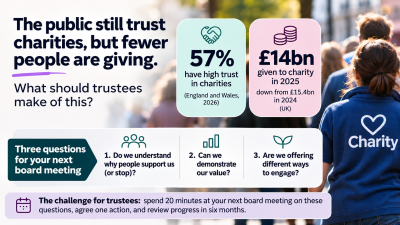
According to the Charity Commission's 2026 research, 57% of people in England and Wales have high levels of trust in charities. The sector remains among the most trusted in society.
Yet research from the Charities Aid Foundation (CAF) suggests that charitable giving in the UK fell from £15.4 billion in 2024 to £14 billion in 2025.
But trust and giving are not the same thing.
Trust reflects confidence in charities' integrity and effectiveness. Giving is influenced by disposable income, personal circumstances, connection to a cause and competing priorities.
We should not assume that declining donations mean declining trust. However, the figures raise important questions about how charities engage with the public.
I would encourage trustees to put three questions on their next board agenda:
- Do we understand why people support us, or stop supporting us? Are we monitoring donor retention, volunteering and engagement, rather than simply fundraising income?
- Can we demonstrate our value? Are we communicating meaningful outcomes and showing supporters the difference their contributions make?
- Are we offering different ways to engage? Not everyone can afford to donate. Are we creating opportunities for people to volunteer, advocate and remain connected?
These are not simply fundraising questions. They are strategic questions about relevance, relationships and long-term sustainability.
My challenge to trustees: spend 20 minutes at your next board meeting discussing these questions. Identify one action to strengthen public engagement and review progress in six months.
The public's trust is a valuable asset. But charities must continue to earn people's engagement and support.
Sources: Charity Commission, Public Trust in Charities 2026 (England and Wales); CAF, UK Giving Report 2026 (UK-wide).