After many years working across the charity sector as a consultant and Interim CEO, I have noticed a significant shift in how organisations are thinking about leadership capacity.
Increasingly, charities are recognising that they do not always need or cannot always afford a traditional full-time executive structure. At the same time, many experienced senior leaders are looking for more flexible ways to contribute their expertise across several organisations rather than within a single permanent role.
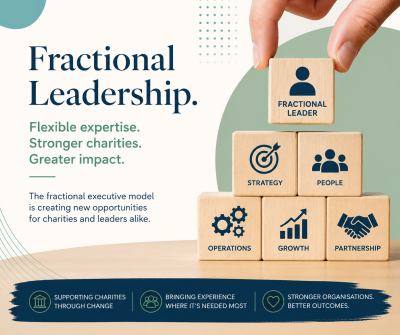
One model I believe will continue to grow is fractional leadership.
In simple terms, this means a senior leader working with an organisation on a part-time, flexible or shared basis. A fractional COO, for example, may help provide operational leadership, organisational development, governance support, systems improvement, financial oversight, change management or stabilisation during periods of transition and growth.
From my perspective, this approach can work particularly well in the charity sector because organisations often need:
• Senior strategic and operational expertise
• Experienced leadership during change or uncertainty
• Additional executive capacity for CEOs and Boards
• Support to strengthen infrastructure, governance and delivery
• Flexibility and affordability
Over recent years, I have seen charities become much more open to interim leadership, consultancy support and flexible executive arrangements. In many cases, organisations value access to experience, judgement and practical delivery over traditional employment models.
I also think fractional leadership can bring wider sector benefits. Leaders working across different charities often bring fresh thinking, external perspective, shared learning and a strong focus on outcomes.
I would be very interested to hear whether others in the sector are seeing similar trends:
• Are Boards becoming more open to fractional executive models?
• Are funders recognising the value of investing in organisational capacity and leadership?
• Is this a genuine long-term shift in how charities access senior expertise?
It feels to me that the sector may be entering a period where leadership itself becomes more flexible, collaborative and shared.


After many years working across the charity sector as a consultant and Interim CEO, I have noticed a significant shift in how organisations are thinking about leadership capacity.
Increasingly, charities are recognising that they do not always need or cannot always afford a traditional full-time executive structure. At the same time, many experienced senior leaders are looking for more flexible ways to contribute their expertise across several organisations rather than within a single permanent role.
One model I believe will continue to grow is fractional leadership.
In simple terms, this means a senior leader working with an organisation on a part-time, flexible or shared basis. A fractional COO, for example, may help provide operational leadership, organisational development, governance support, systems improvement, financial oversight, change management or stabilisation during periods of transition and growth.
From my perspective, this approach can work particularly well in the charity sector because organisations often need:
• Senior strategic and operational expertise
• Experienced leadership during change or uncertainty
• Additional executive capacity for CEOs and Boards
• Support to strengthen infrastructure, governance and delivery
• Flexibility and affordability
Over recent years, I have seen charities become much more open to interim leadership, consultancy support and flexible executive arrangements. In many cases, organisations value access to experience, judgement and practical delivery over traditional employment models.
I also think fractional leadership can bring wider sector benefits. Leaders working across different charities often bring fresh thinking, external perspective, shared learning and a strong focus on outcomes.
I would be very interested to hear whether others in the sector are seeing similar trends:
• Are Boards becoming more open to fractional executive models?
• Are funders recognising the value of investing in organisational capacity and leadership?
• Is this a genuine long-term shift in how charities access senior expertise?
It feels to me that the sector may be entering a period where leadership itself becomes more flexible, collaborative and shared.